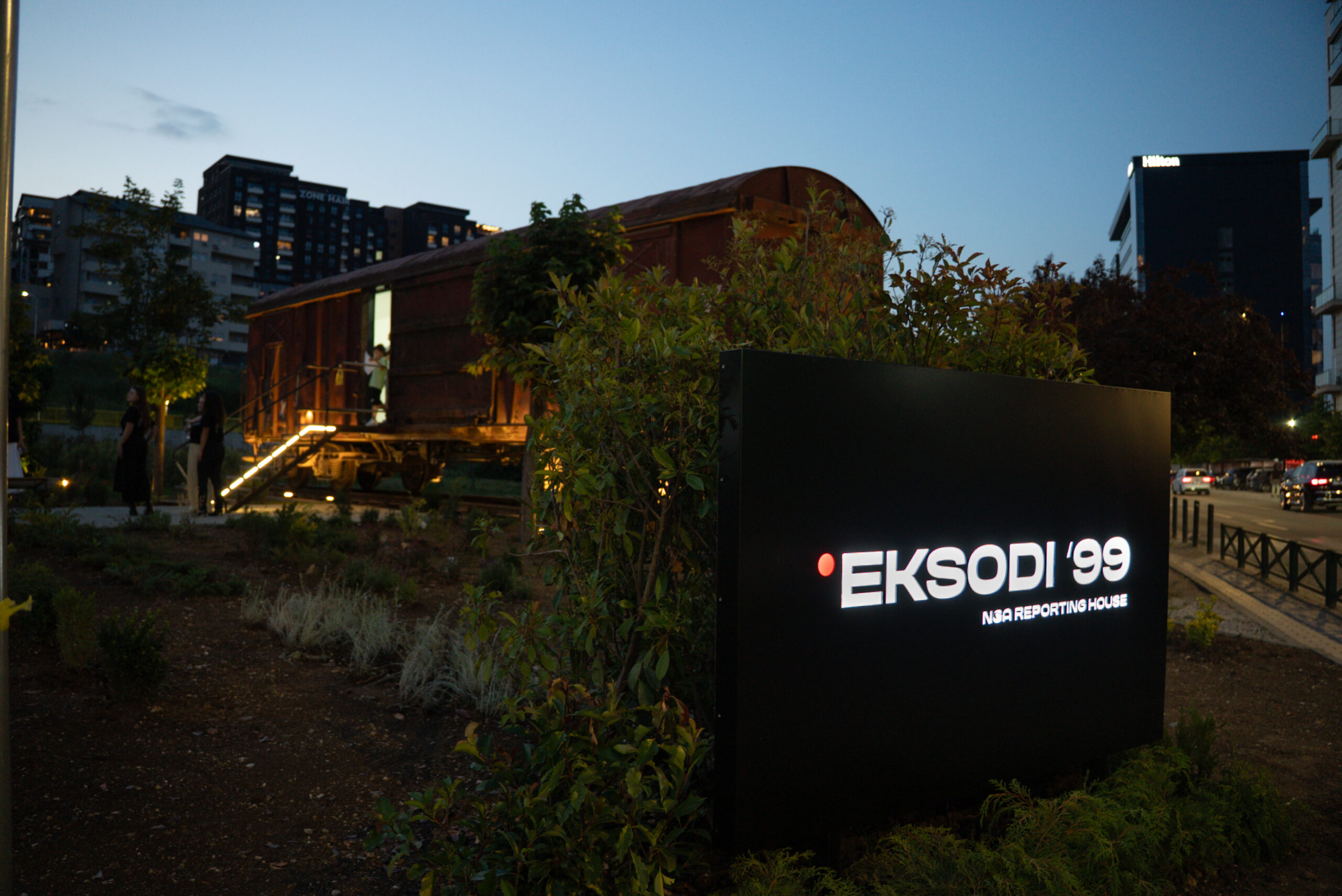
The “Exodus ’99” Museum has opened at the Pristina Railway Station, a project produced by Reporting House that documents the experiences of hundreds of thousands of Kosovo Albanians who were forcibly expelled during the 1999 war.
The opening ceremony was attended by government officials, diplomats, researchers, civil society activists, artists, and numerous members of the public.
Located at the very site from which trains transported refugees to North Macedonia in the spring of 1999, the museum brings renewed attention to one of the most dramatic chapters in Kosovo’s recent history. Between March and June 1999, hundreds of thousands of Kosovo Albanians were expelled from their homes along the Pristina–Hani i Elezit railway line, in one of the largest forced population displacements in Europe since the Second World War.
The exhibition features 48 personal testimonies from people who lived through the exodus, collected and shared 27 years after the war. The stories are organized around four main themes: expulsion, life in refugee camps, staying with host families, and return. Alongside the testimonies of refugees, the museum also presents accounts from those who remained in Kosovo, hid during the war, or joined the armed resistance.
“Exodus ’99” seeks to preserve the memory of the refugee experience and create a space for reflection for generations who did not live through the war. Through personal testimonies, the museum shifts the focus from statistics to the individual experiences of people who lost their homes, were separated from their families, and were forced to seek refuge outside Kosovo.
The museum is produced by Jeta Xharra and curated by Gazmend Ejupi. It was founded by Reporting House, BIRN Kosovo, and Prishtina Biennale.
“Exodus ’99” is located at the Pristina Railway Station and is open to visitors from Tuesday to Sunday, from 12:00 to 20:00.