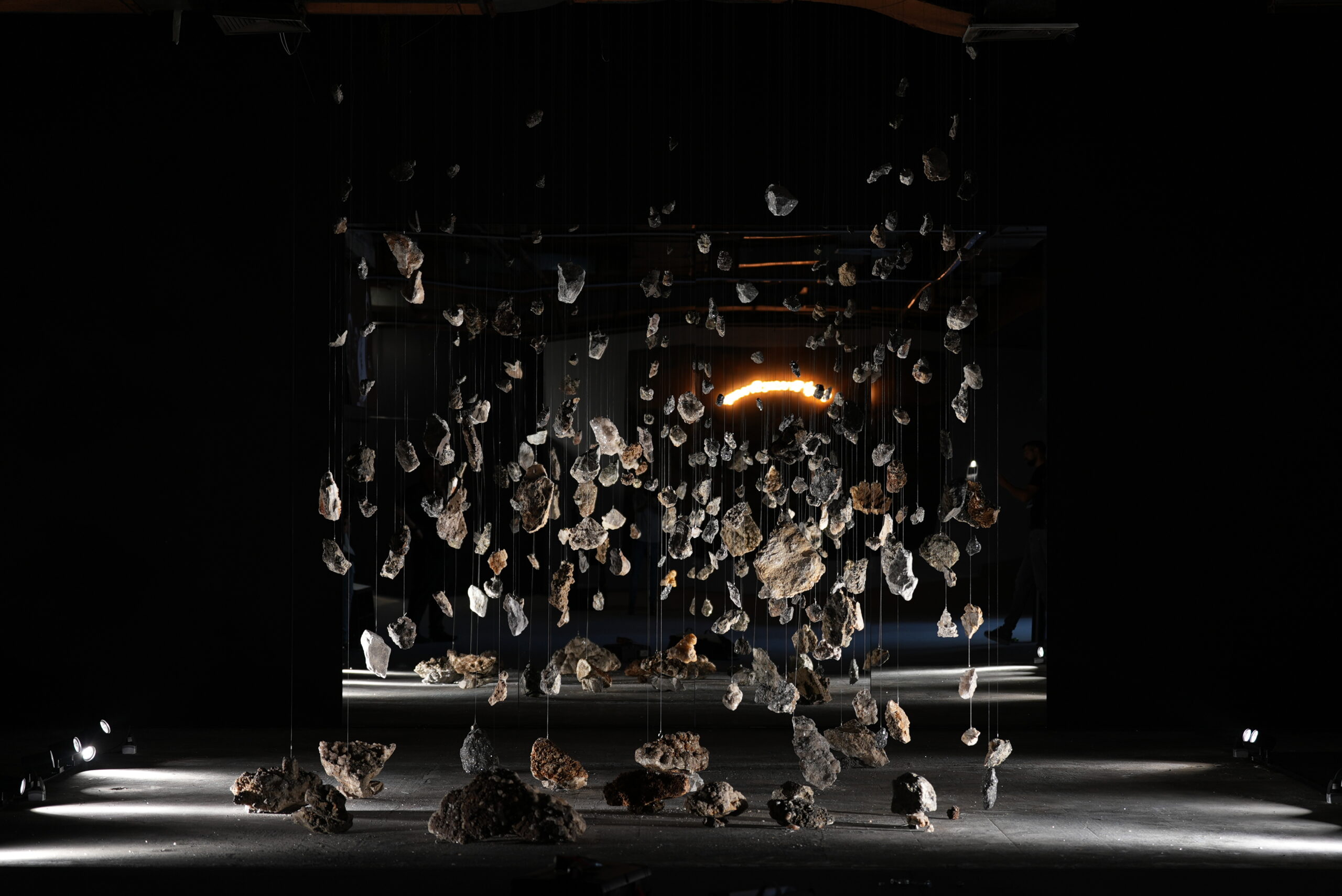
Today, Wednesday, June 18, 2025, Reporting House will unveil a special installation made from 500 original mineral crystals brought from the Trepça Mine, marking the first anniversary of Reporting House.
Titled 100, the installation also commemorates 100 years since the beginning of Trepça’s modern industrial era.
Reporting House announced that the minerals featured in 100, curated by Gazmend Ejupi, come from the Stantërg Mine, the oldest mine within the vast Trepça complex, located a few kilometres from Mitrovica and around 45 kilometres north of Prishtina.
The minerals were extracted from a depth of 750 metres by miners who continue to work in extremely difficult conditions, facing temperatures of up to 50 degrees Celsius, high humidity, dirt and dust, often without adequate protective equipment.
“And yet, the lead and zinc ores contained in these rocks, extracted under primitive and arduous conditions, ultimately find their way into our pockets through modern technologies such as the mobile phones we use every day. Trepça’s lead and zinc are also used in car batteries. These raw, luminous and striking crystals are more than a geological wonder. They are a calendar of history, silent witnesses to labour, their ancient geological timeline now intertwined with the recent decades of our resistance and liberation,” the announcement states.
According to Reporting House, the Stantërg Mine, one of the oldest within the Trepça industrial complex, was developed by a British mining company in the 1920s, several years after Kosovo came under Serbian rule. During the Second World War, Nazi Germany took control of Trepça and retained it until 1944, when the Yugoslav Partisans came to power. A new era of mining followed, focused on extracting large quantities of ore with minimal investment.
During what became known as Trepça’s golden age, from 1960 to 1981, employment expanded significantly, eventually reaching 22,885 workers in 1988, compared with around 8,000 at the beginning of the period. As Slobodan Milošević moved to abolish Kosovo’s autonomy within Yugoslavia, Trepça became one of the centres of resistance.
“In 1989, 1,200 miners staged an eight-day hunger strike underground, seeking to defend the constitutional position established by the 1974 Yugoslav Constitution. Although the strike assumed historic proportions, it failed to halt the suppression of Kosovo’s autonomy and became a warning of the violent dissolution of Yugoslavia that was to follow,” the announcement states.
Mining at Trepça has a much longer history, with evidence of activity dating back to the Roman period. The name Trepça itself appears in a papal document dating from 1303.
“Lead, zinc, silver and gold ores were extracted at Stantërg. The Ottomans took control of the mine in 1455. Following the destruction caused during the War of the Holy League, mining activity ceased toward the end of the seventeenth century,” Reporting House states.
Trepça’s modern industrial revival began with assessments of its lead and zinc deposits during the 1920s, an initiative associated with Yugoslav Prime Minister Nikola Pašić and his son Rade. After exploratory work was completed in 1925, a 50-year concession agreement was reached with Selection Trust, a British mining finance company.
In 1927, Selection Trust established a London-based subsidiary called Trepça Mines Limited. Production began in 1930, and the company operated the mine until the Second World War.
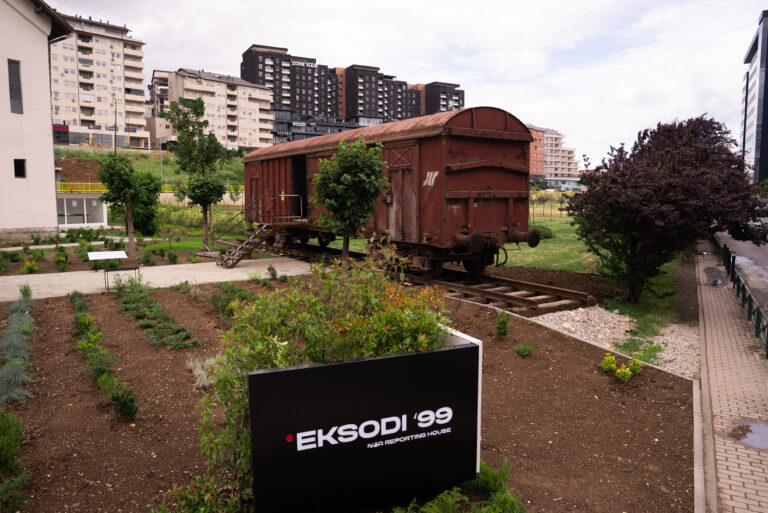
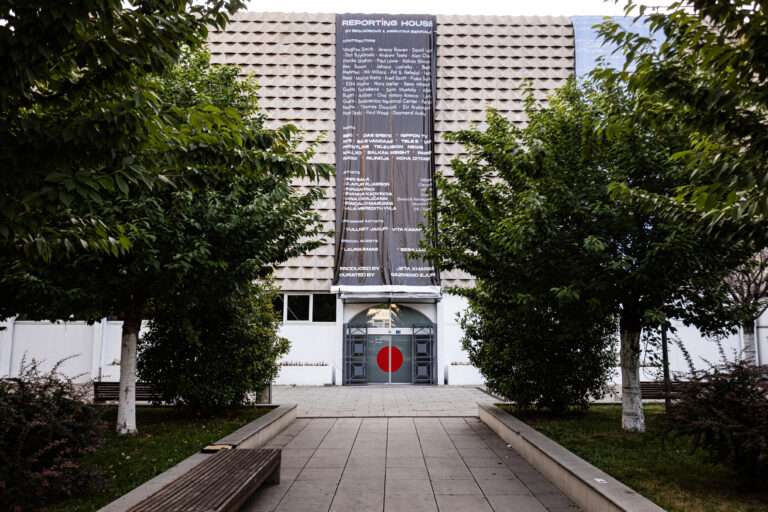
Reporting House opened on June 10, 2024, in Prishtina’s former Gërmia department store.
Through its exhibitions and programmes, Reporting House documents and presents the extensive work of local and international journalists who reported on the war in Kosovo.