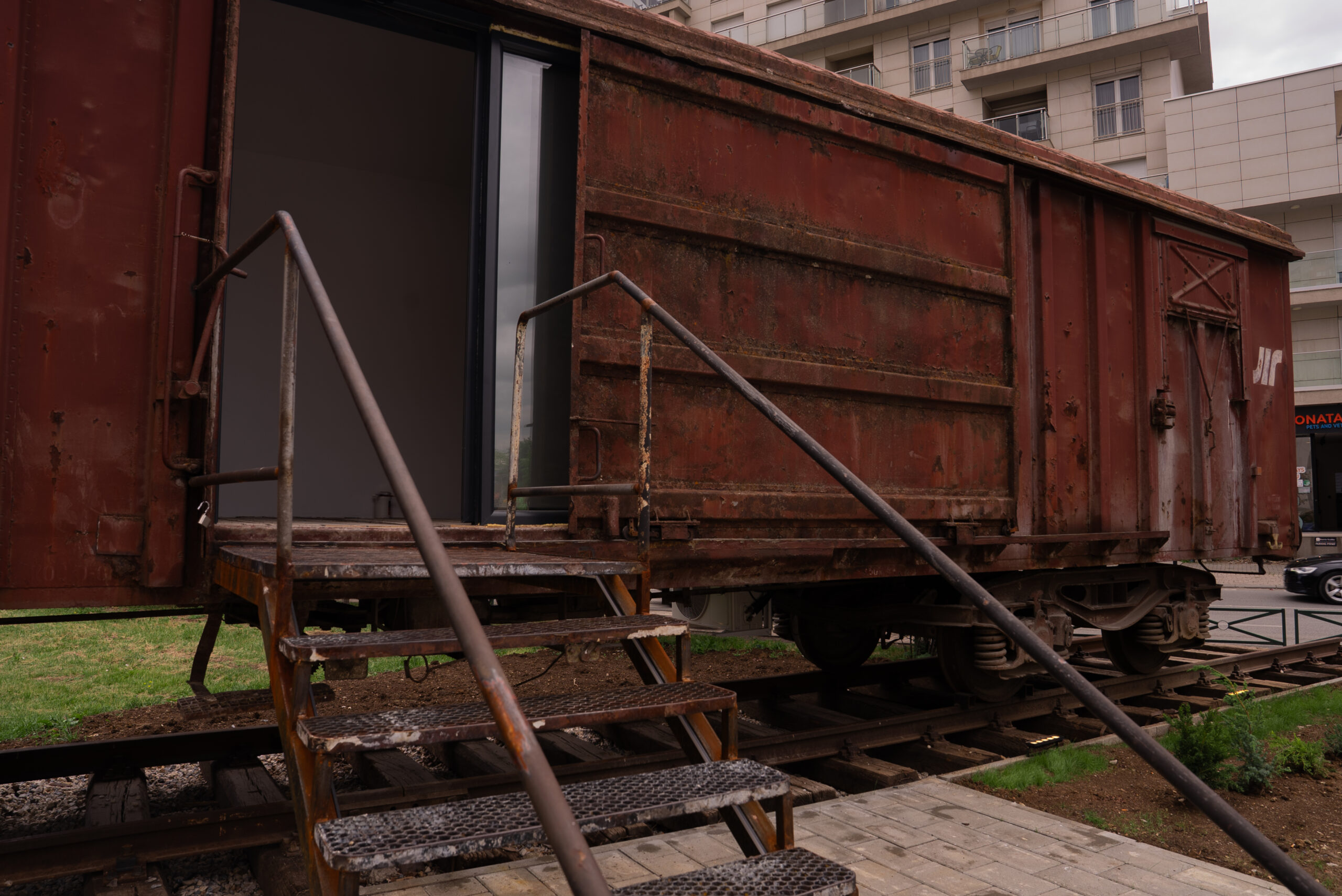
The History of the Wagon
The freight wagon displayed at the Exodus ’99 Museum stands as tangible evidence of one of the most painful chapters in Kosovo’s history during the 1998-1999 war. It belongs to a series of freight wagons manufactured for the railways of the former Yugoslavia, primarily between the 1960s and 1980s.
This type of wagon was originally designed to transport goods and livestock, not passengers. However, in the spring of 1999, when thousands of Kosovo Albanians were forcibly expelled from their homes, Serbian authorities and forces also used these wagons to deport civilians. Once regular passenger carriages had filled with refugees, freight and livestock wagons were also used to transport people in inhumane conditions towards the border with North Macedonia.
Today, wagons similar to this one can still be found in Miradi e Poshtme, around 10 kilometres from Prishtina, as part of the material legacy of the former Yugoslav railway system. The presence of this wagon at the Exodus ’99 Museum serves as a tangible reminder of the suffering, forced displacement and resilience of the people of Kosovo during the war.